Pricing
Simple pricing. No insurance battles.
Creating an account and building a board from your exact photos is free.
One membership adds the personalized art, automatic teaching, and progress tracking: $9.99 a month, cancel anytime.
See the full pricing breakdown →
$9.99/month
My World Plus — the membership
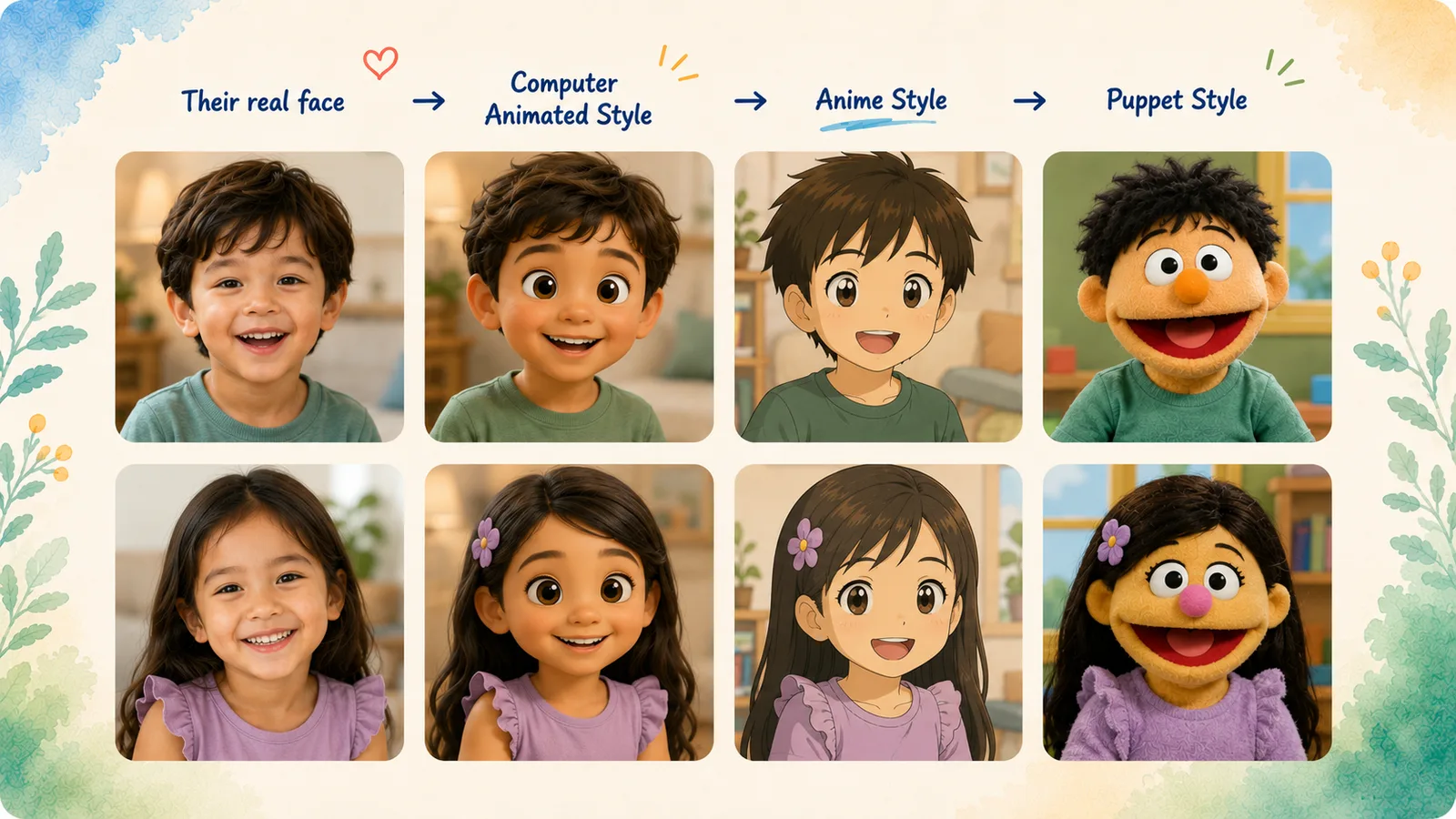
- Enrollment gift: your child's whole starter board personalized up front: 100+ tiles and two family portraits, a ⭐120+ value on your first ⭐50
- ⭐50 image credits every month after (use within 30 days)
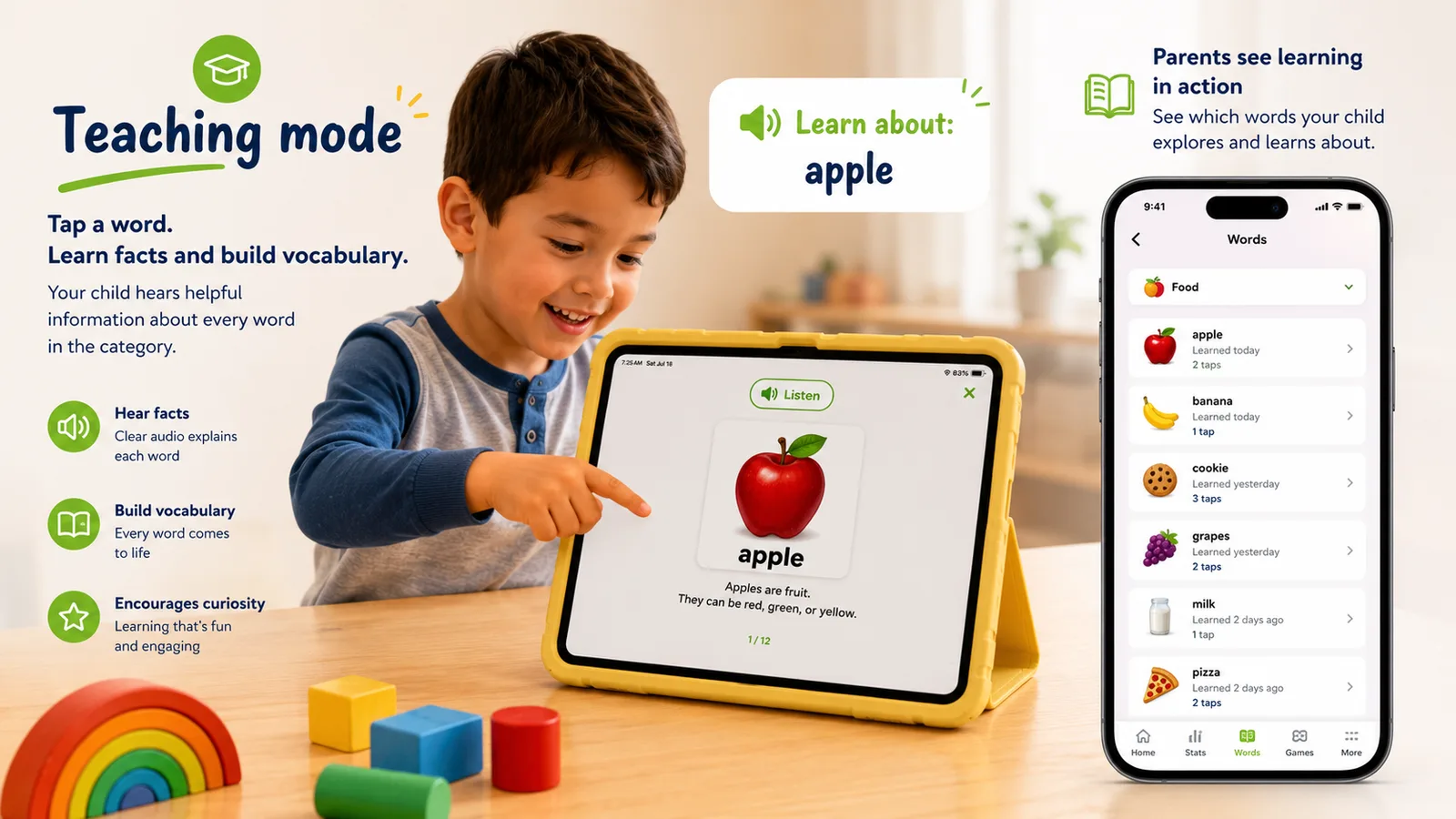
- Automatic teaching mode: walks your child through every topic and keeps going until they've mastered it
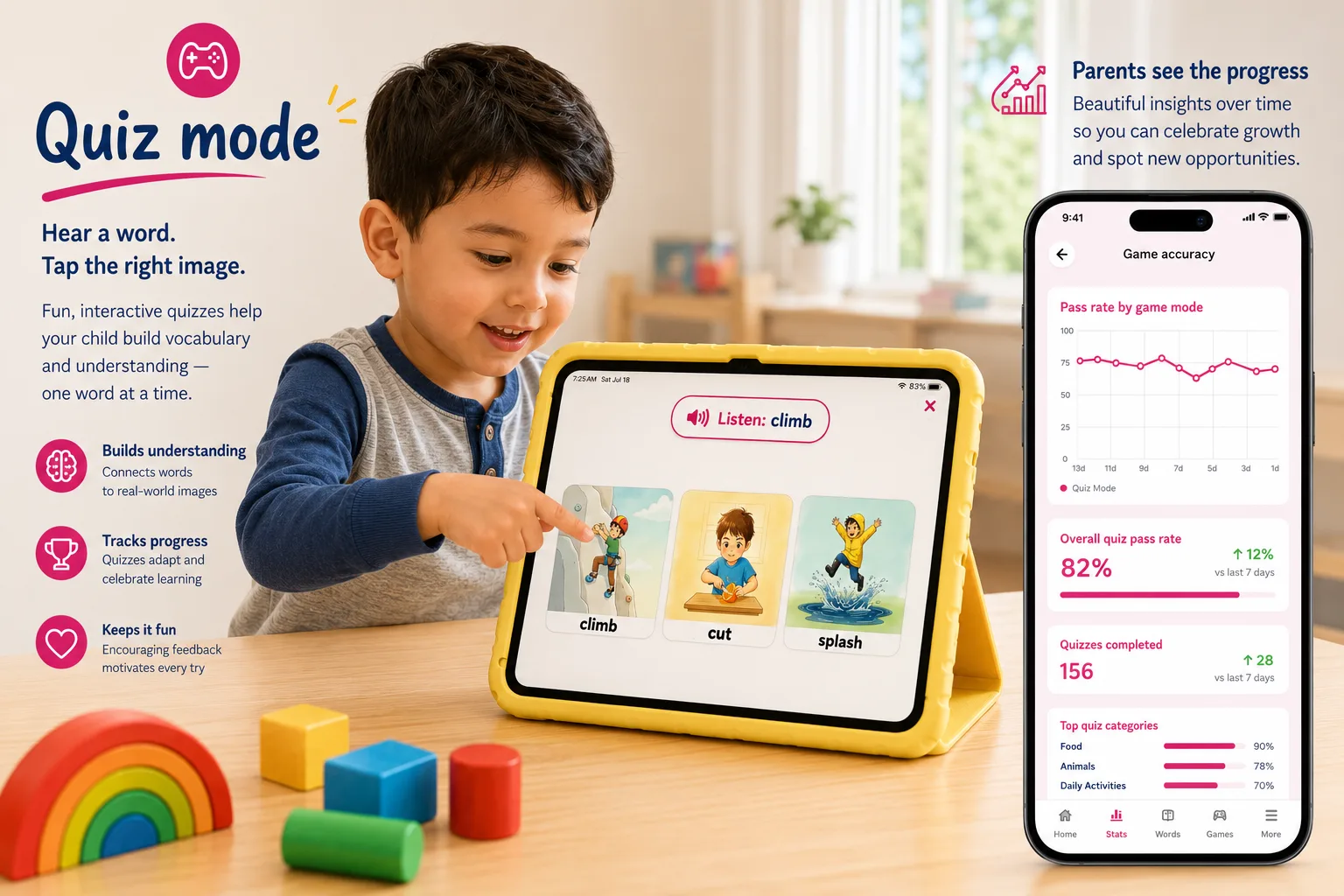
- Progress tracking & shareable reports
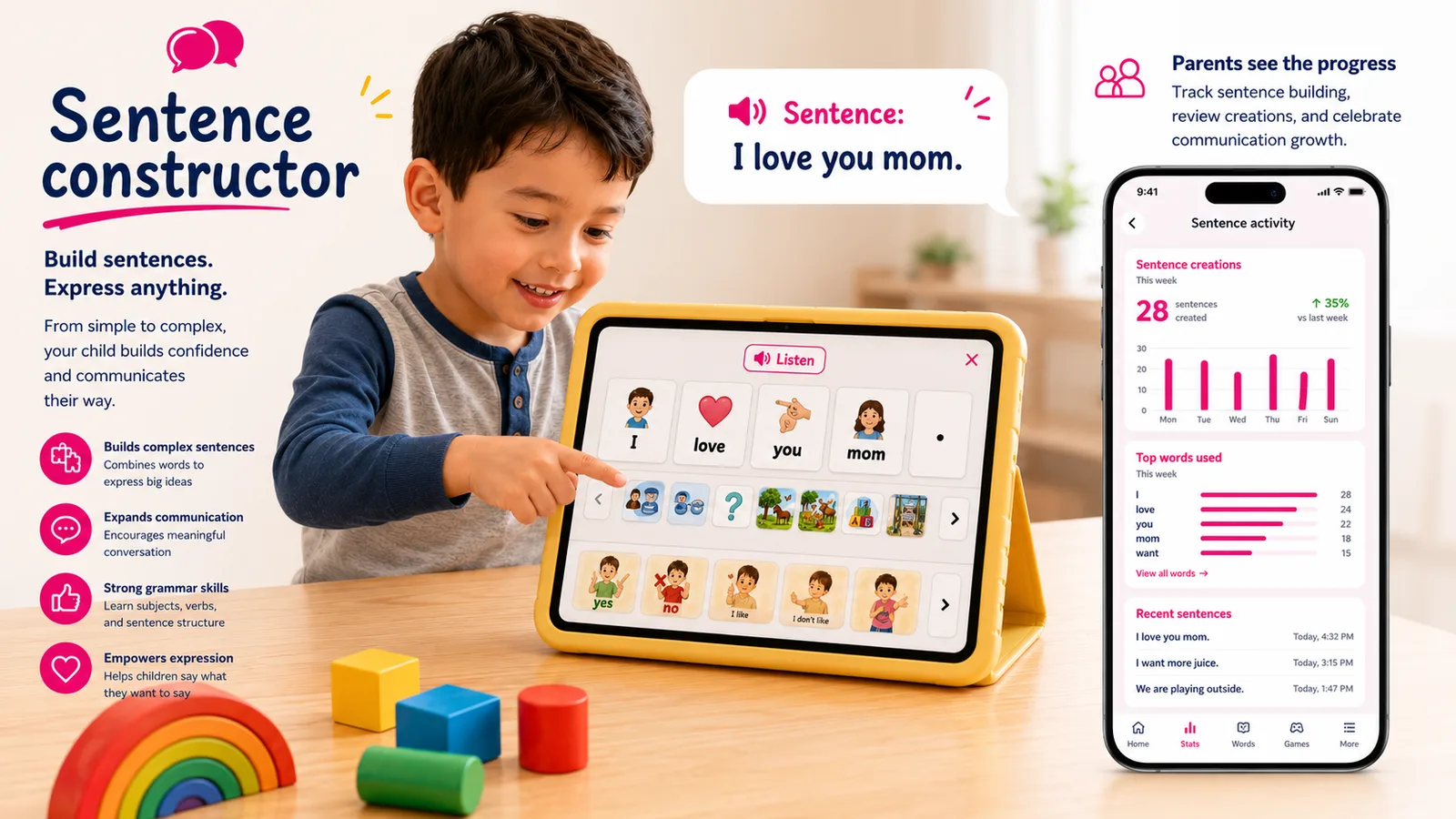
- Sentences spoken as one natural phrase, not word-by-word
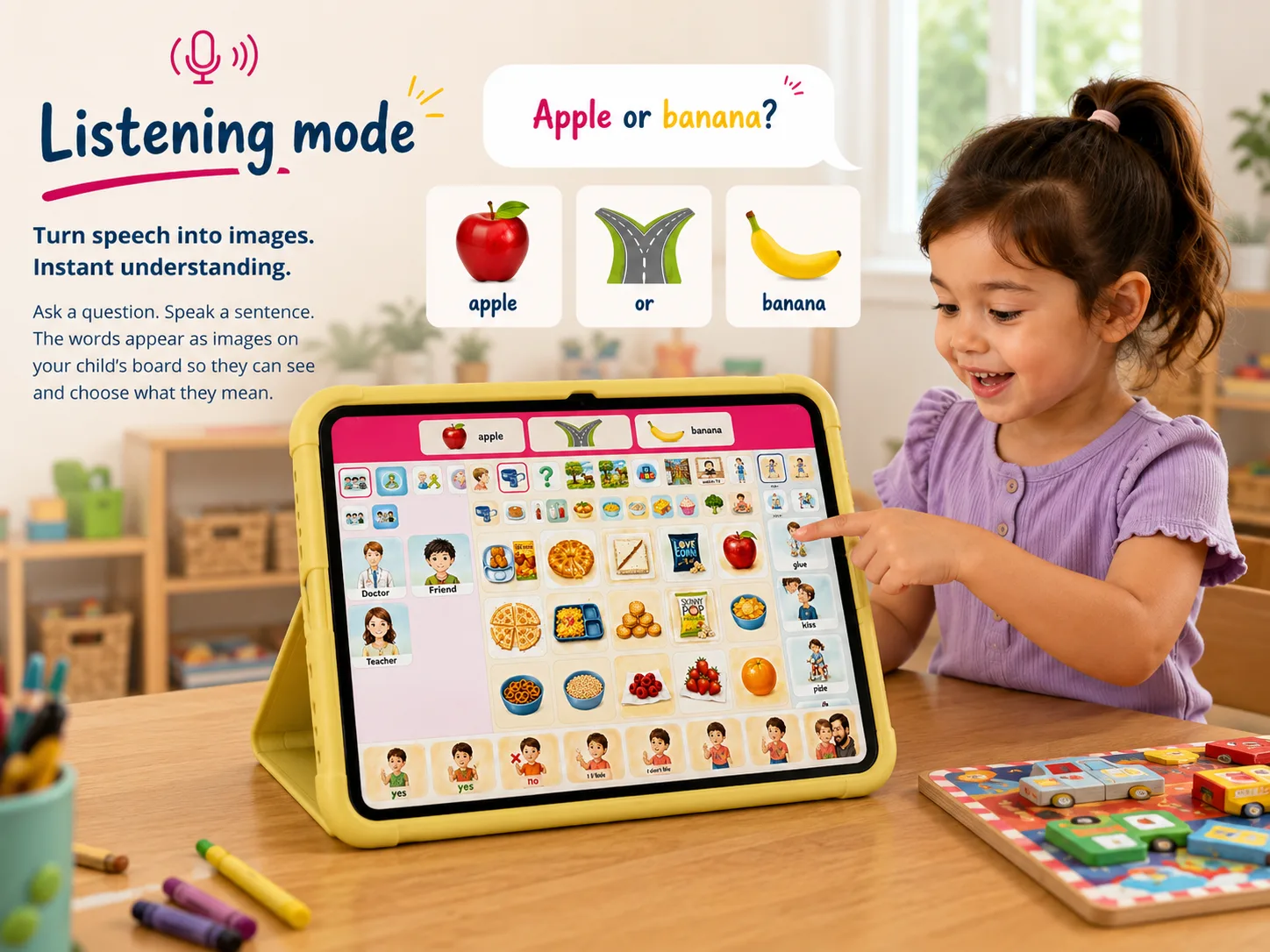
- Words your child hears in listening join the board with one tap
$49.99 one time
The Basic Board
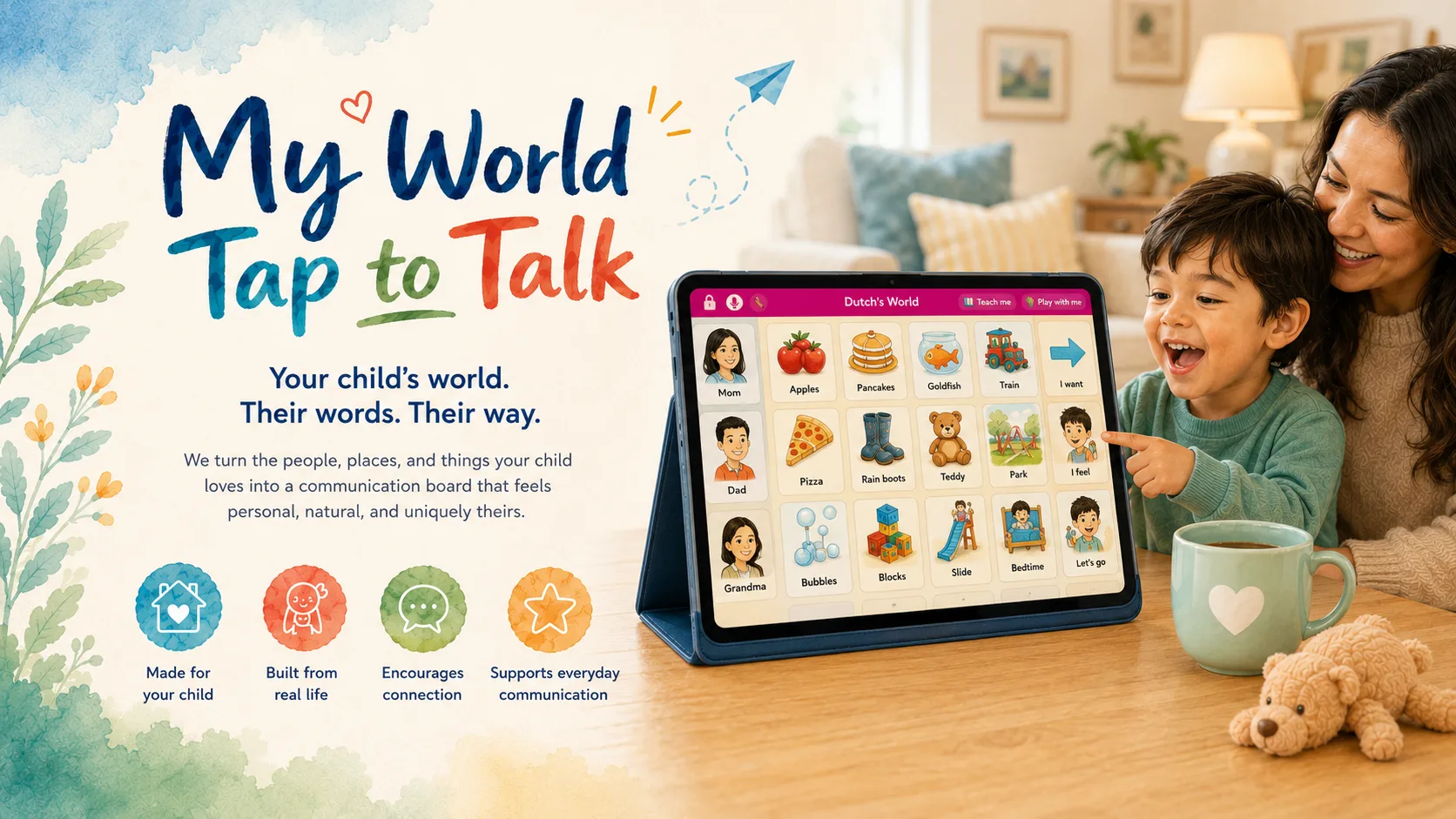
- For the earliest communicators: giant tiles, a two-page needs strip of the twenty words they need most, six simple folders, single-tap speech
- $24.99 with the membership · includes ⭐50 image credits to add their people, foods, and toys
- Grows into the full board anytime: same pictures, nothing re-bought
- See it live on the demo board →
Try it with a real safety net: enrollment builds the full board right away, so you can see it working
for your child in the first week, and you're free to cancel anytime. Everything you've made is yours to
keep, forever, including every personalized picture, on the free plan.
Bespoke art styles, tiles that speak in your cloned voice, and personalized behavior books are coming later —
join the waitlist and tell us which you'd want.
Always included, on every plan, free
- Listening mode: words spoken around your child light up as tiles, in real time
- The sentence builder: drag tiles up top to build an utterance that speaks
- The full vocabulary: ~1,200 of the most common words, numbers 1–100, and the alphabet
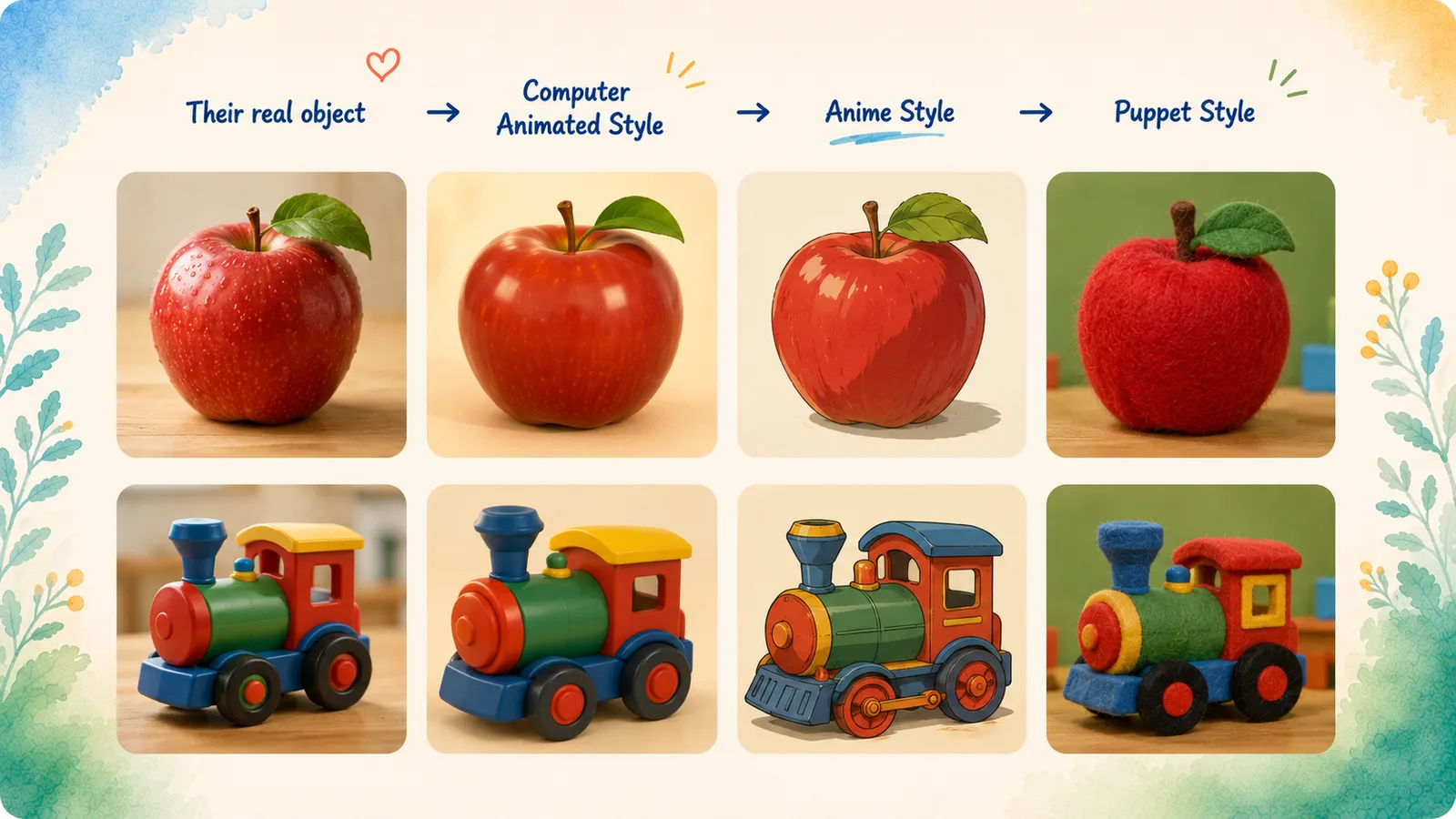
- Add anything and it matches: parent-added pictures are styled to fit the board, so it stays coherent after fifty additions
- Pictures of your child and family are always original renders, never stock, on every plan
- The parent app: message your child from your phone, use it as a remote for the device, and schedule the day (including auto-teach sessions)
- Unlimited tiles from your exact photos (no restyle, no credits)
- Natural voices to pick from, or record your own voice on any tile
- Invite your child's speech therapist to review the board and run activities
- Everything you make is archived, never deleted: old pictures are one tap from coming back
1 credit = one styled picture · family-member portraits use 5 · credit top-up packs from $4.99 stack on the membership; pack credits never expire.
The membership renews monthly until cancelled; manage or cancel anytime in the store.
Create your child’s board — free
No card needed to start.